Captura 1 de 14
Ampliar
Acerca del proyecto
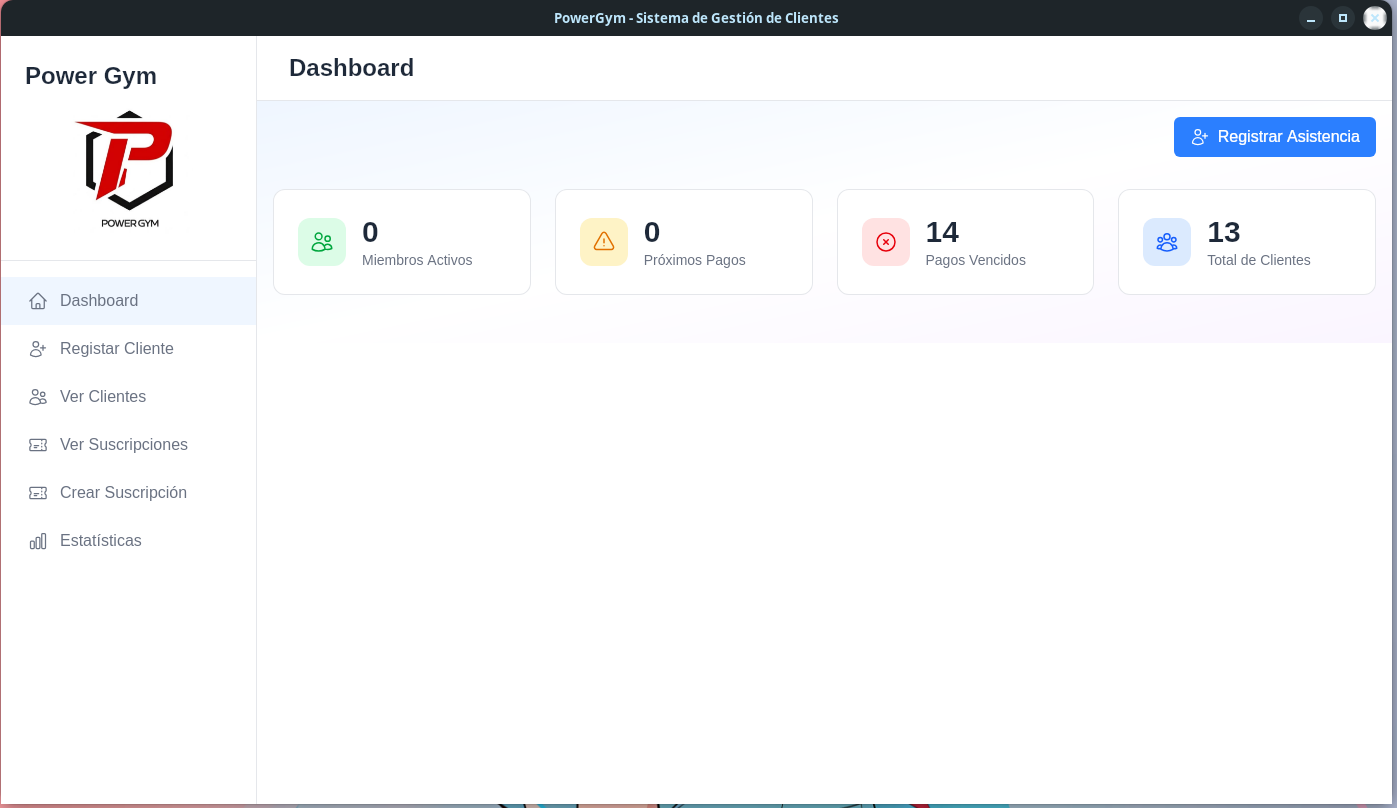
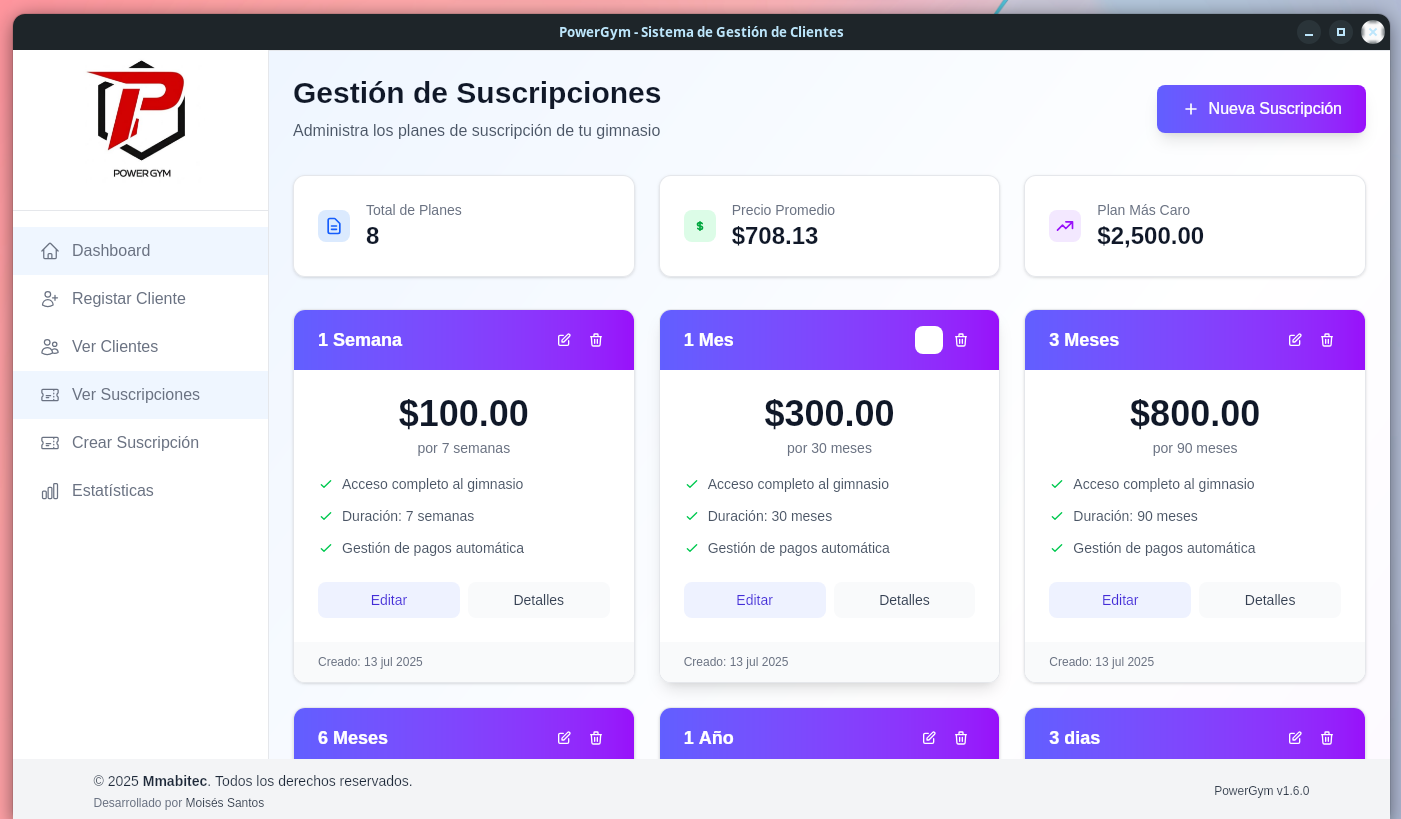
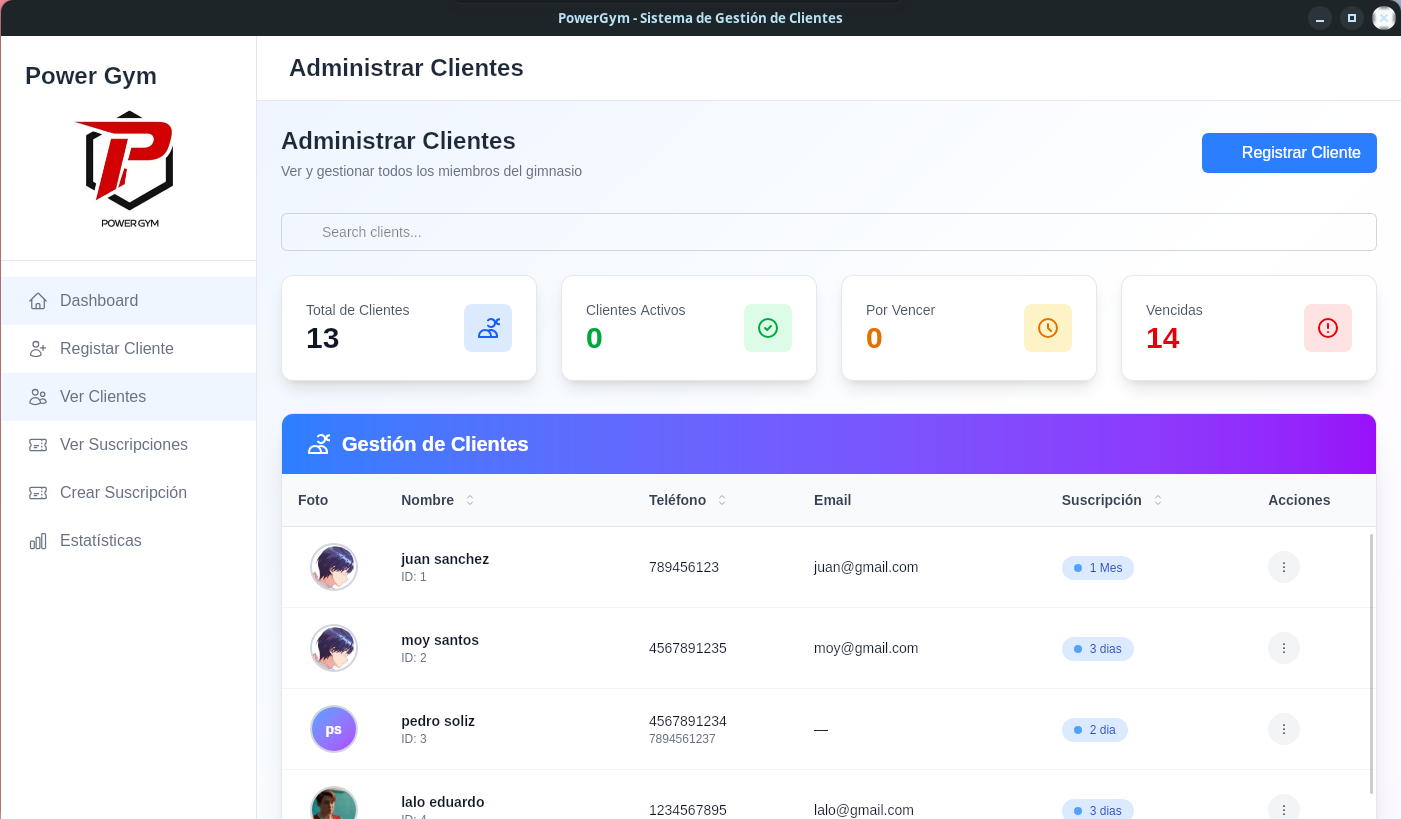
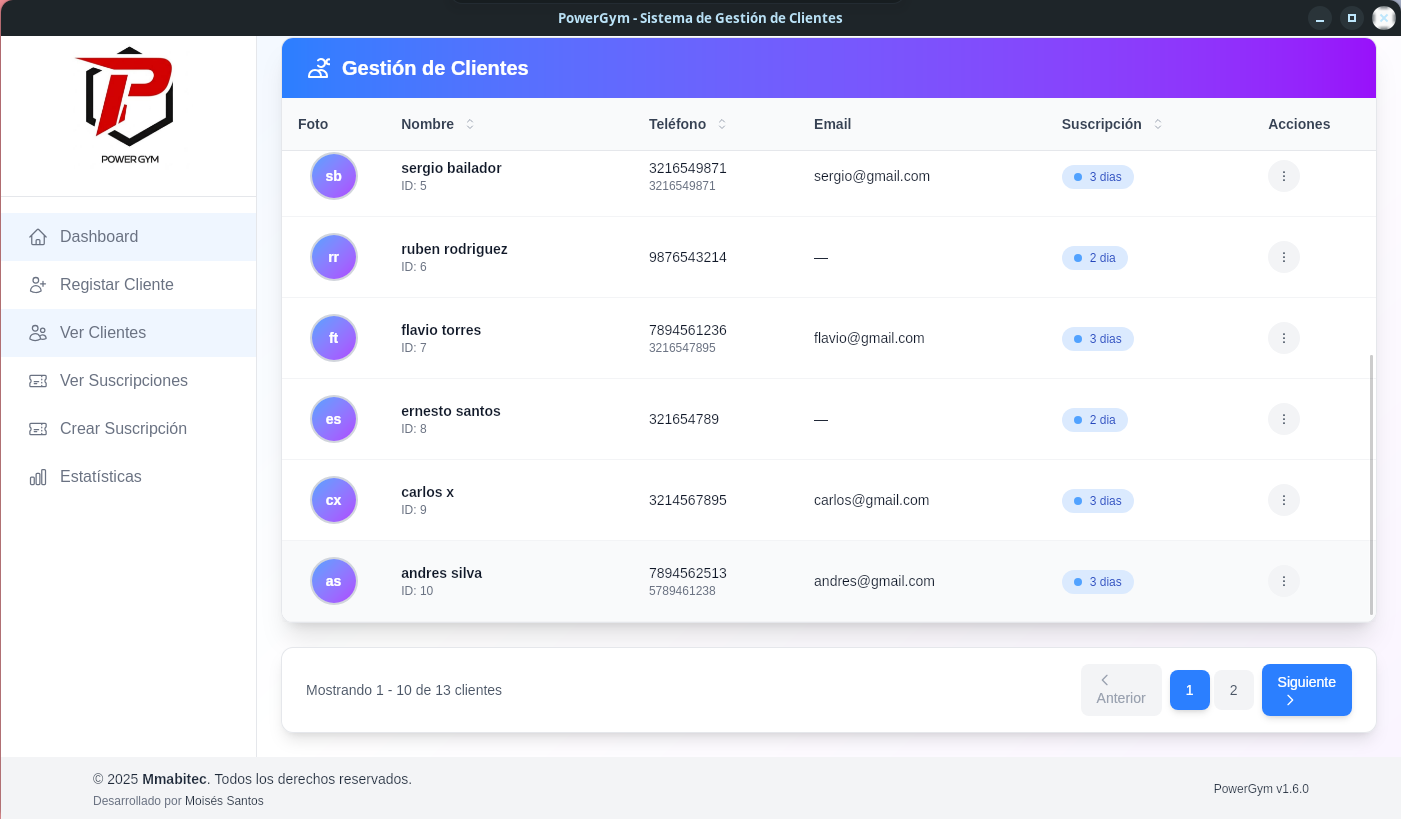
PowerGym is a desktop application developed with Go (Golang), Wails, and Vue.js that allows for efficient and modern gym management. Designed to replace manual record-keeping, PowerGym digitizes and automates the management of users, attendance, payments, and memberships, offering visual tools such as graphs and reports that facilitate decision-making. Ideal for gyms looking to optimize their operations and have complete control over their customers and finances.
Stack Tecnológico
Tecnologías utilizadas
- Go (Golang)
- Wails
- Vue Router
- Chart.js
- Vue.js
- Pinia
- SqLife
Características clave
Funcionalidades principales
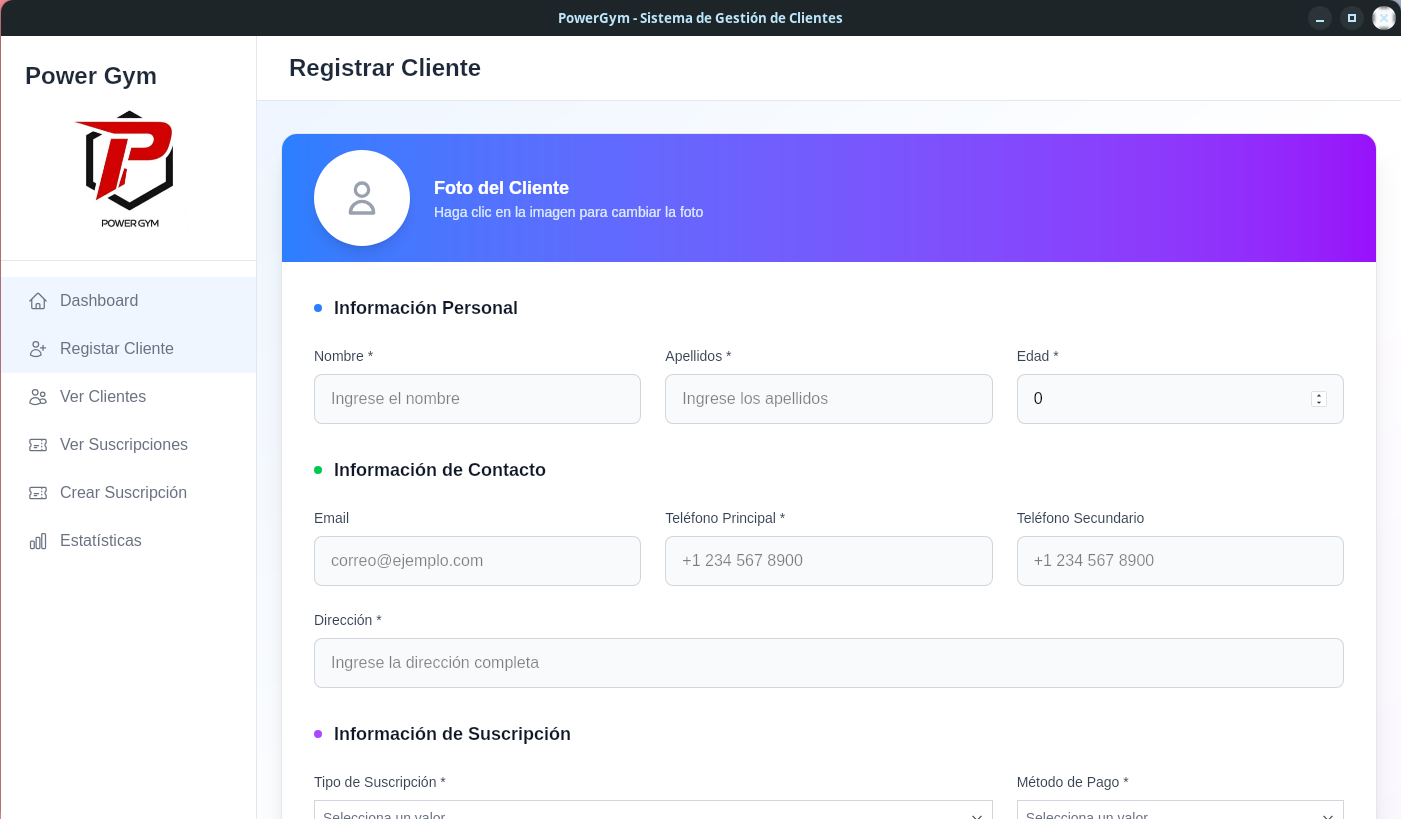
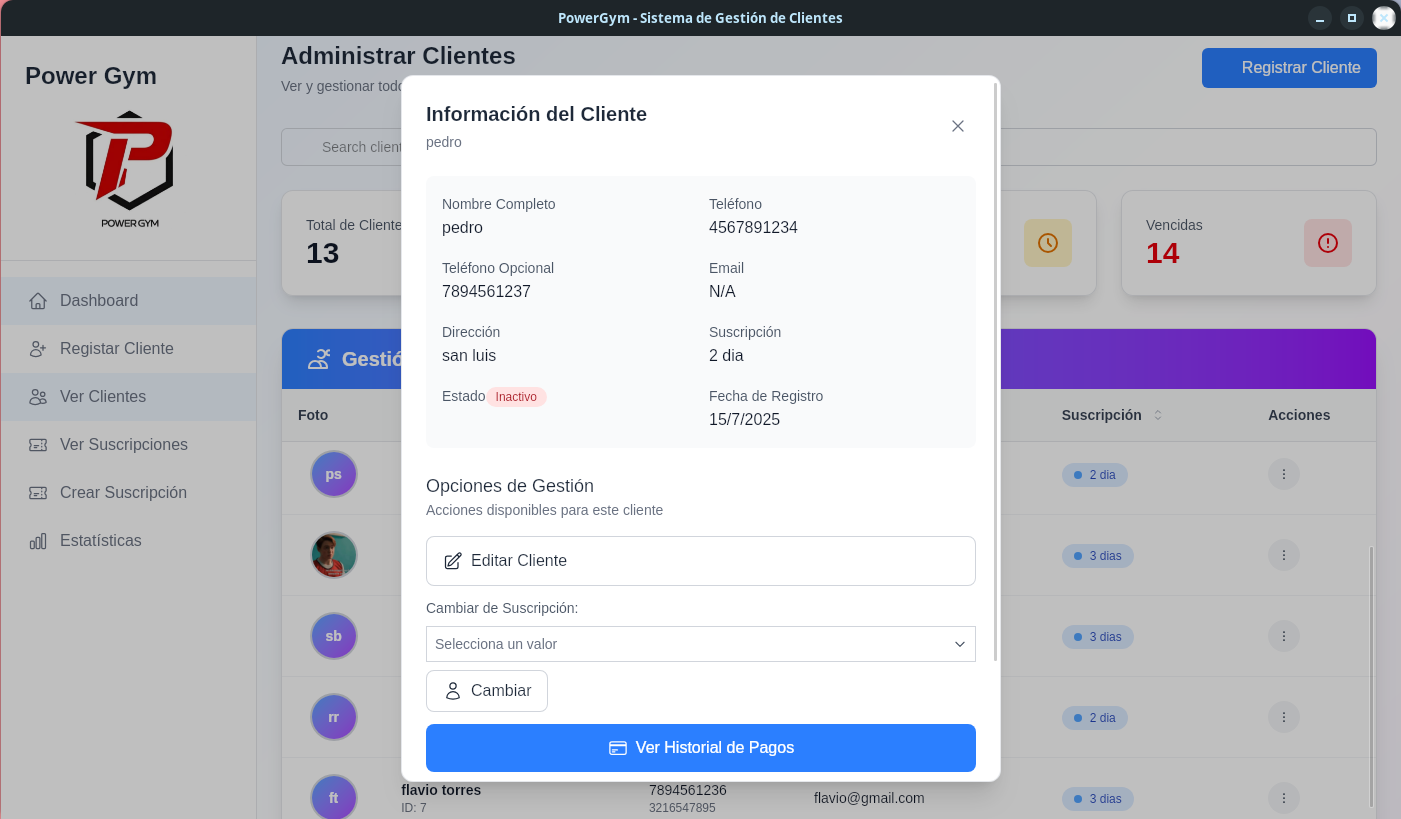
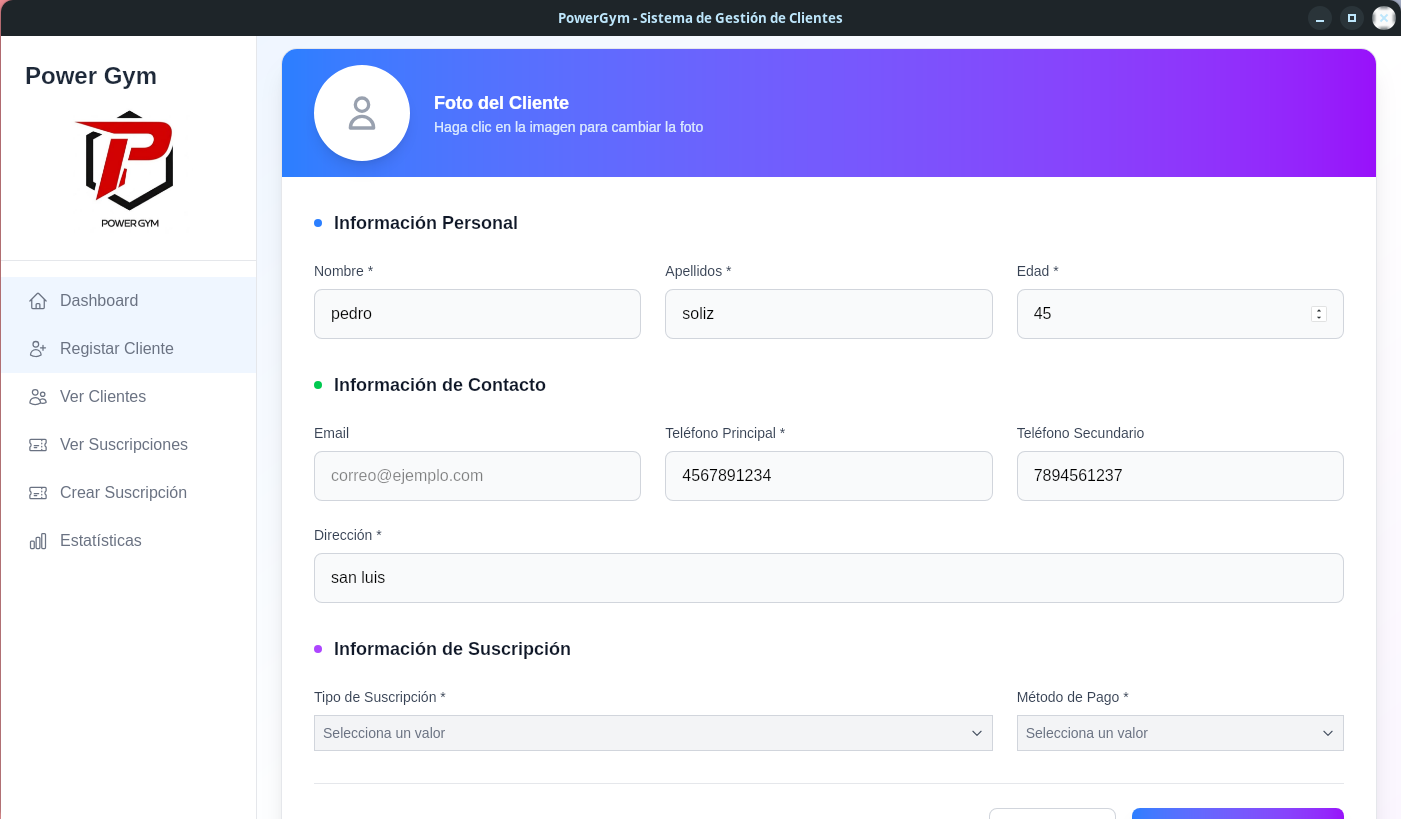
- Client registration with personal and contact information.
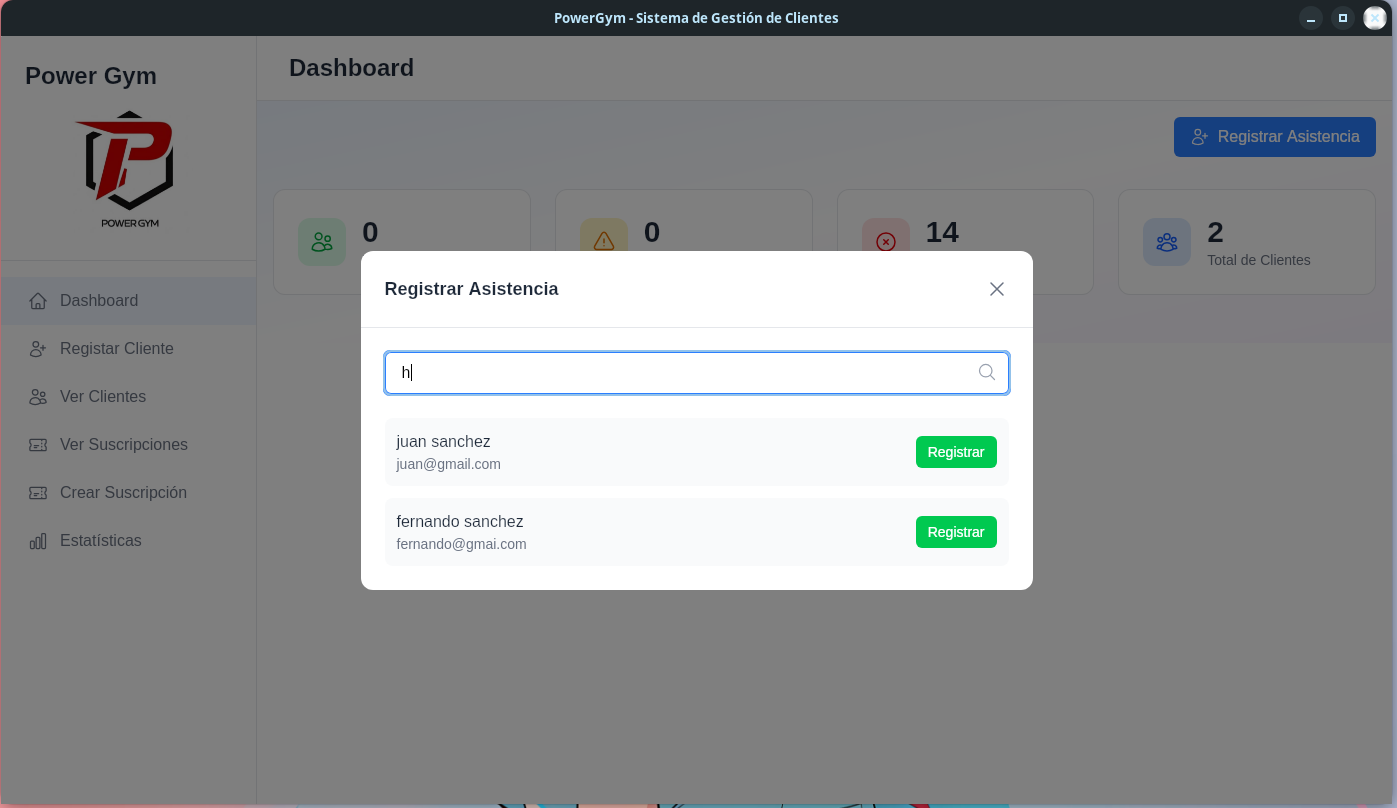
- Attendance history for individual follow-up.
- Quick check-in and check-out of clients.
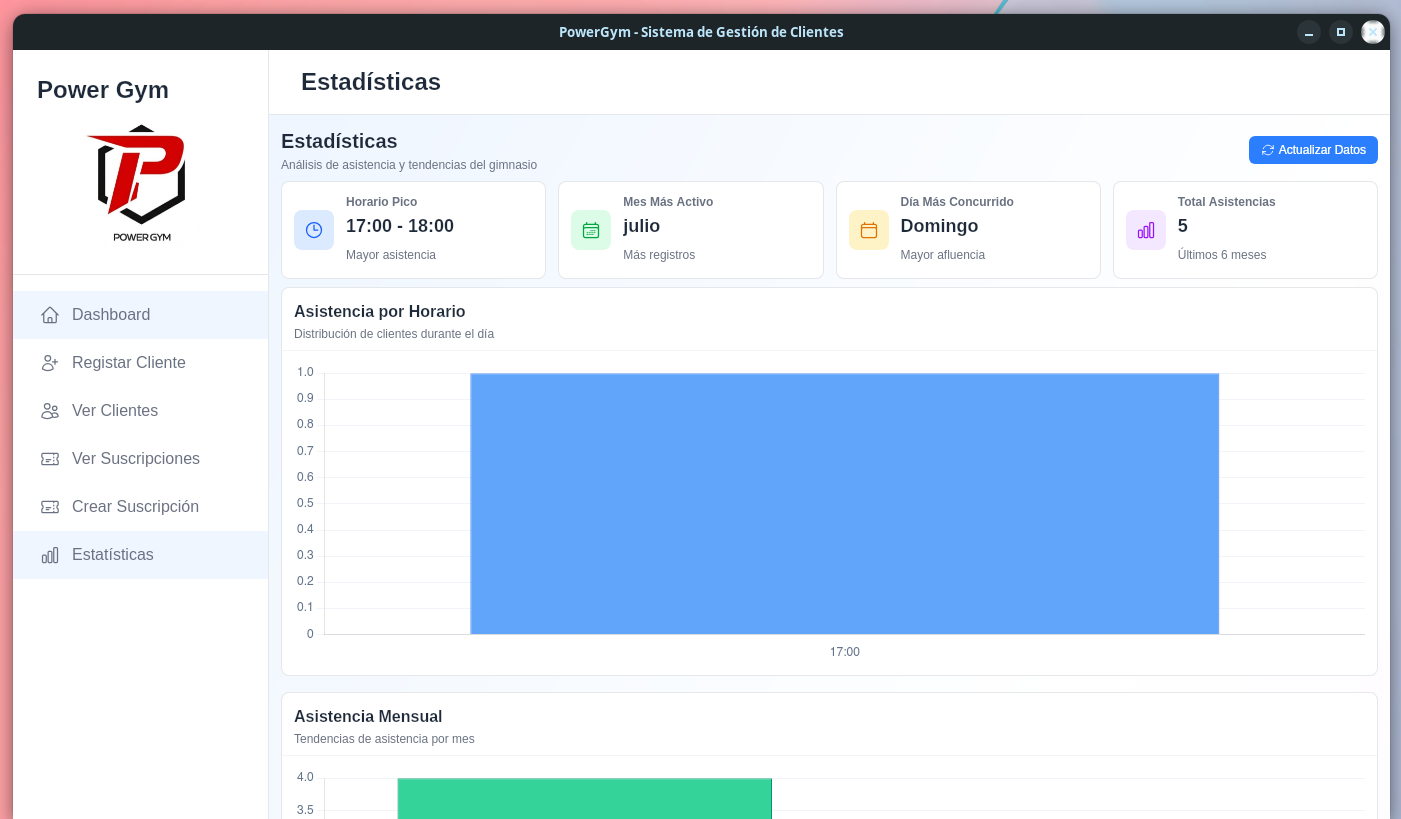
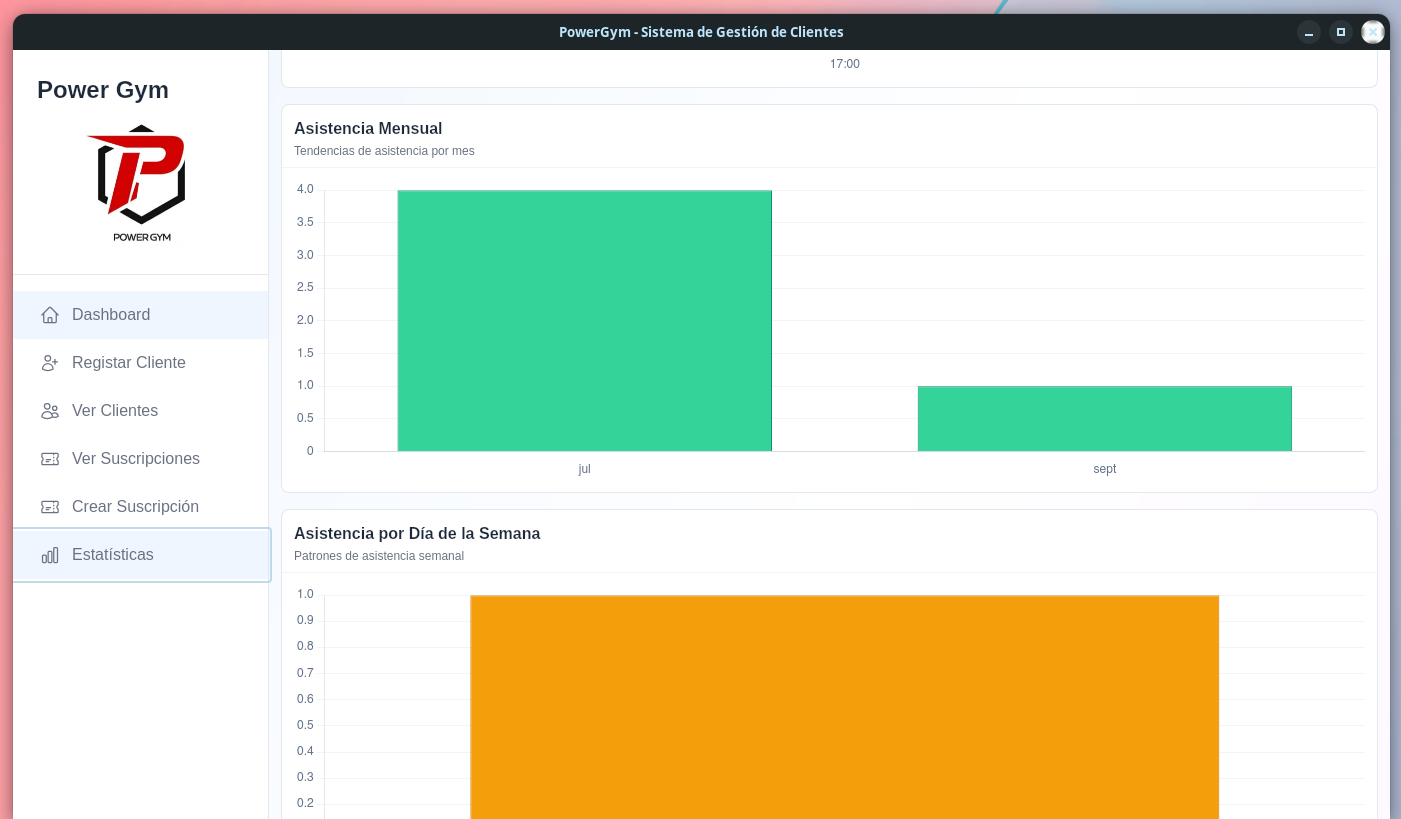
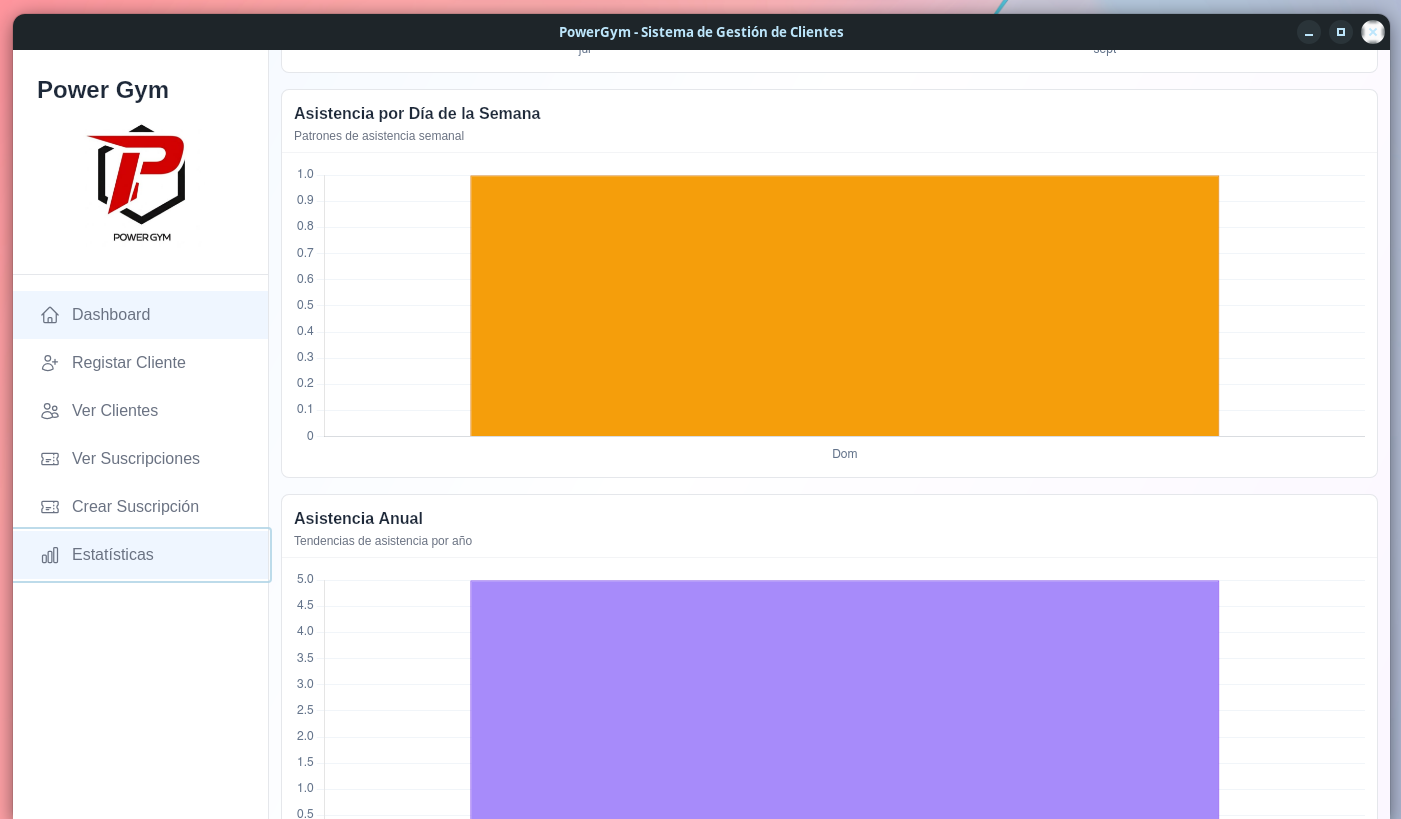
- Statistics on peak days and times.
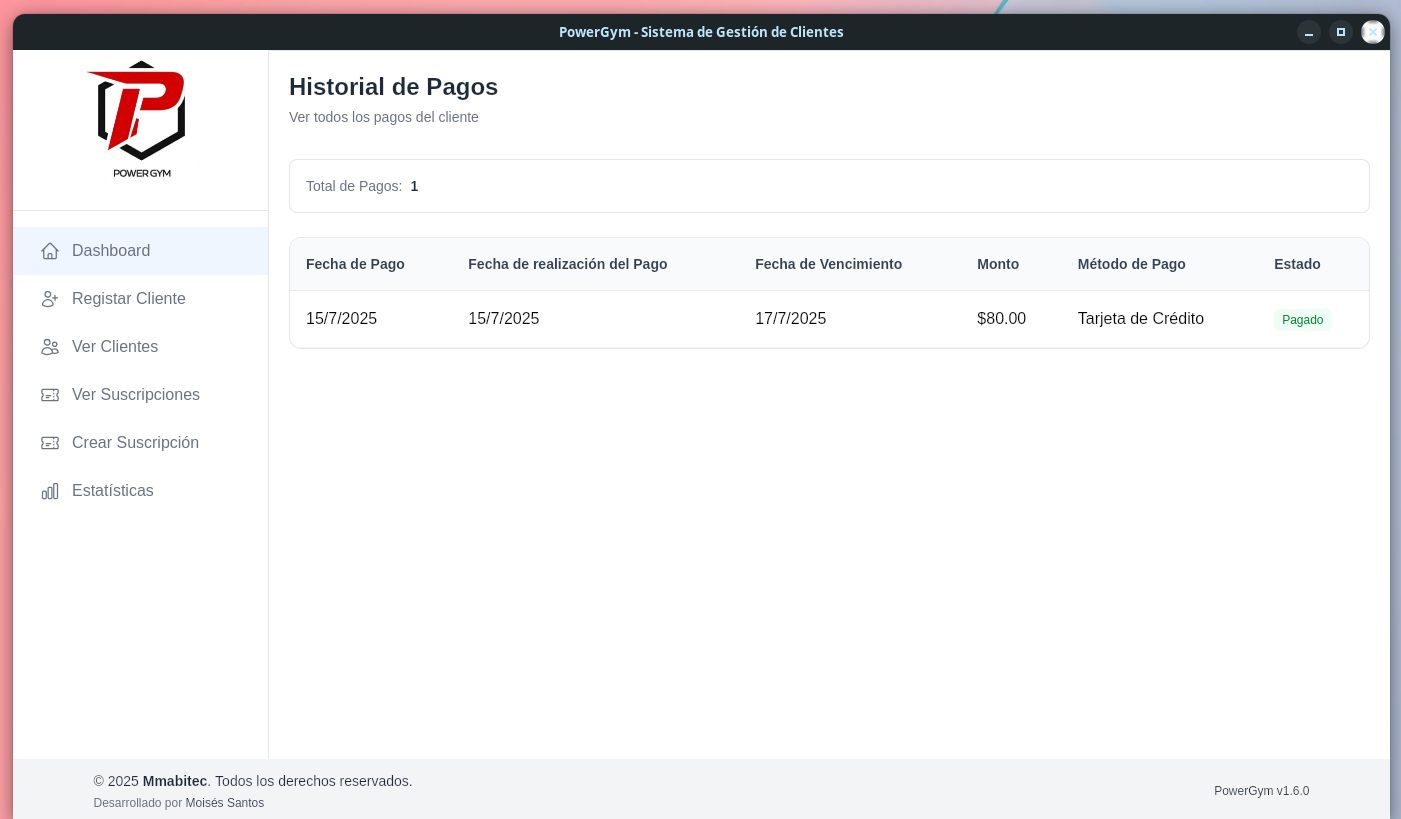
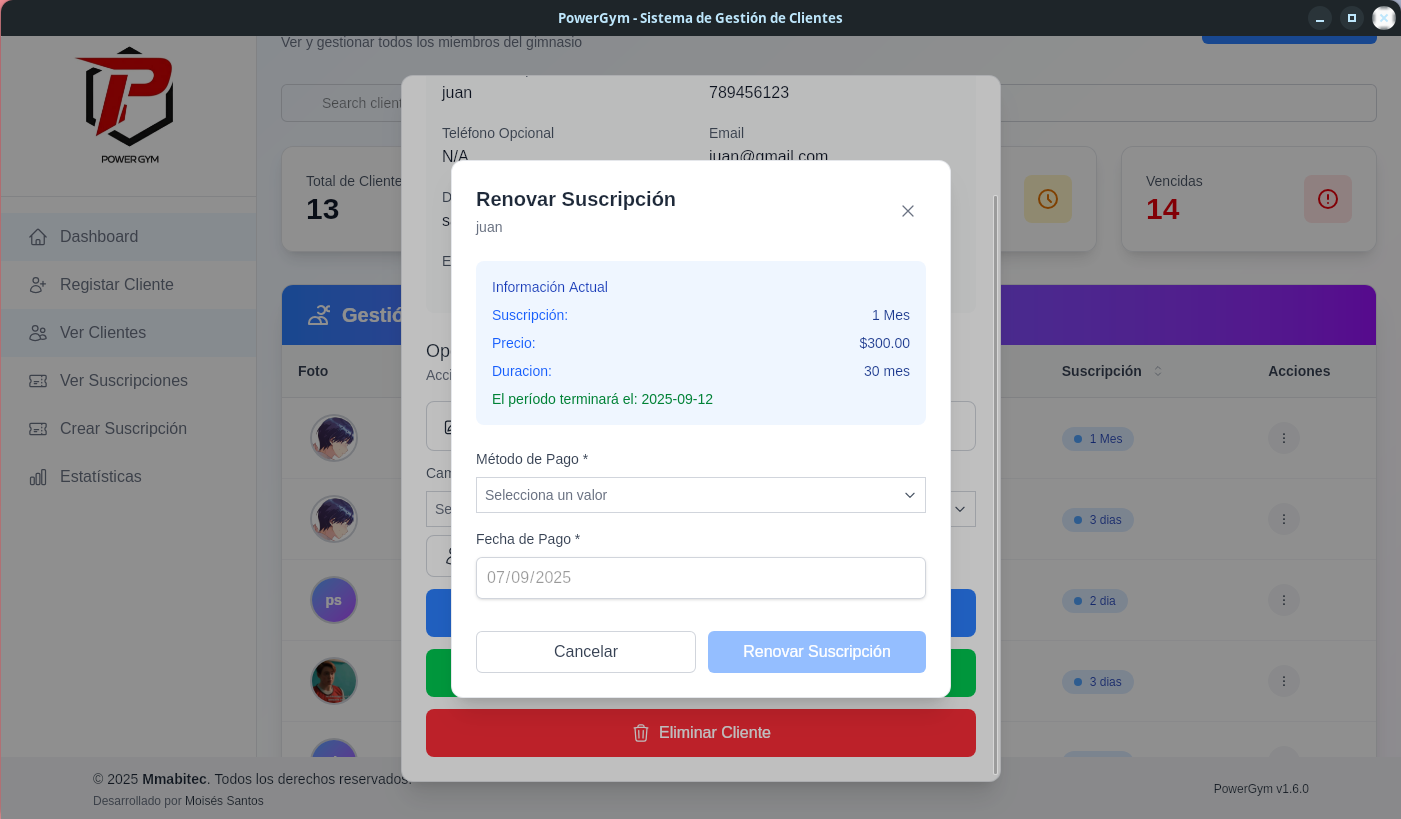
- Payment and subscription management
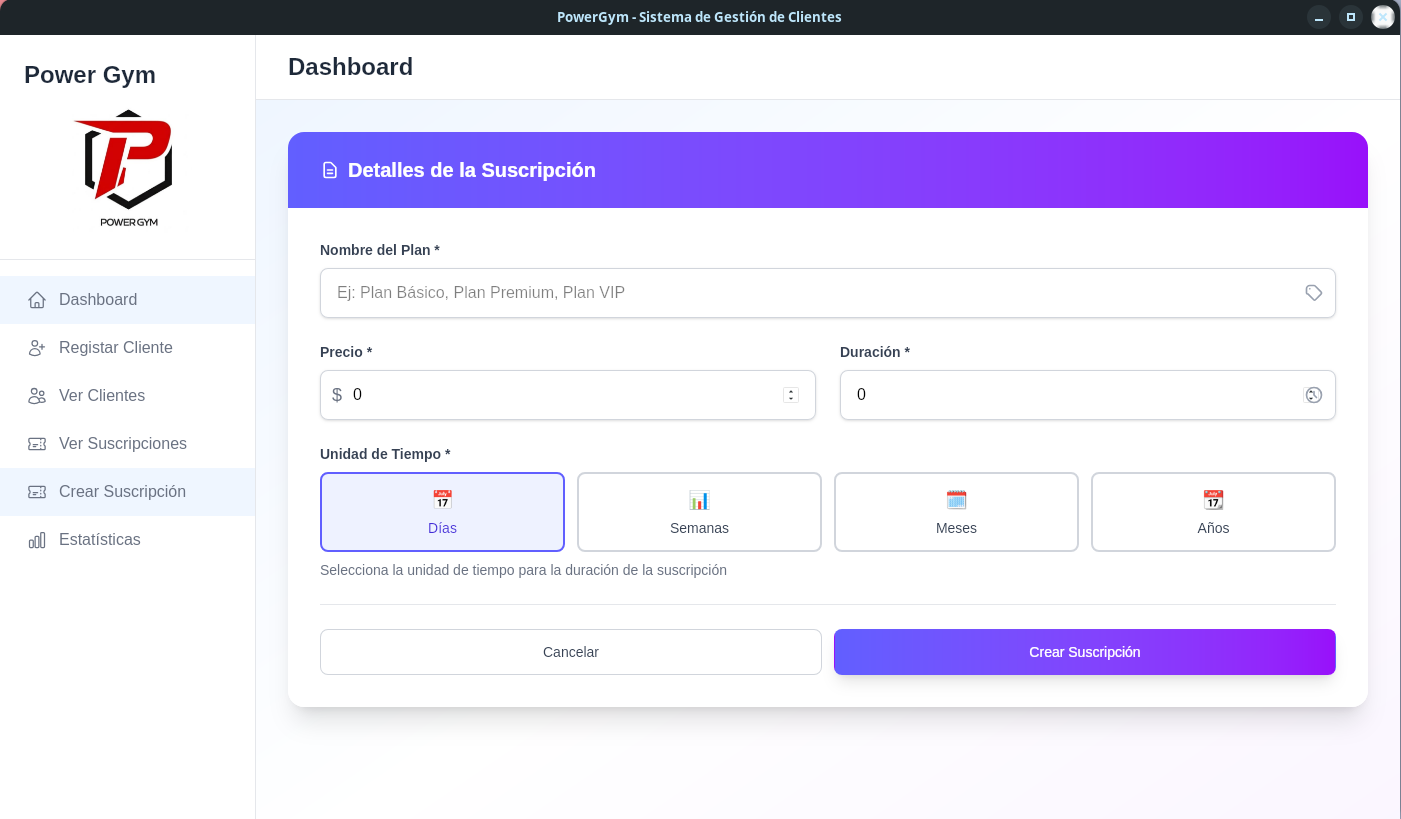
- Management of plans, memberships, or training packages.
- Tracking of subscription payments and expiration dates.
- Alerts for clients with pending payments or subscriptions about to expire.
- Creation of different types of subscriptions (monthly, quarterly, annual, etc.).
- Ability to assign multiple plans to the same client.
- Display statistics with Chart.js: most frequent days, peak times, number of visits.
- Analysis of revenue, active clients, and gym growth.
- The entire process is managed digitally, replacing notebooks and manual records.
Lecciones Aprendidas
Retos resueltos e investigación
- Desktop application development with Wails.
- Integration of the frontend with the backend in Go, controlling business logic and inter-layer communication.
- Use of SQLite for local storage, SQL queries, and persistent data management.
- Design of efficient data models for users, subscriptions, payments, and attendance.
- Optimization of queries and management of relationships between tables.
- Data interpretation to generate useful reports for management.
- Management of local files and persistent data for reports (PDF, CSV if added in the future).
- Planning complex projects: functionalities, user flows, and priorities.
- Real-world problem-solving: automation of manual processes.
- Customer requirements analysis: Understanding exactly what the gym's managers needed and translating it into concrete functionalities.
- Effective communication with the client to define requirements.
- Solving real problems using software.
- Analytical and critical thinking: representing data in a useful and clear way for the end user.